Bitcoin Bomber: Disgruntled Swede Jailed for Mailing Bomb to Crypto Firm

https://www.ccn.com/bitcoin-bomber-disgruntled-swede-jailed-for-mailing-bomb-to-london-crypto-firm/


bitcoin bomber crypto mailbox


A Swedish man has been found guilty of attempted murder after sending a mail bomb to a bitcoin firm based in London.

According to detectives from London’s Metropolitan Police Service, 43-year old Jermu Michael Salonen sent the mail bomb following a refusal by Hackney-based Cryptopay to change his password.

As initially reported by the City A.M., Salonen had emailed the firm last year in August requesting a password reset, but his wish was denied by the customer service team because it would violate the company’s privacy policy. According to local police, the mail bomb was not a dud.

“Salonen seemingly made and sent a device that had the capability to seriously harm and even kill over something as inconsequential as a change of password,” Commander Clarke Jarrett, the head of the Metropolitan Police Service Counter Terrorism Command, said.

Sheer Luck that Bomb Didn’t Go Off

london bitcoin crypto

It is not clear when Salonen sent the mail bomb but the bookkeeping firm, The Accountancy Cloud, which once counted Cryptopay as its client, received the package sometime in November last year. An employee of the accounting firm started opening the padded envelope this year in March but fortunately stopped halfway through when they grew suspicious.

Additionally, the employee’s technique of opening the envelope helped forestall a disaster, according to Jarrett:

“It was due to sheer luck that the recipient ripped opened the package in the middle rather than using the envelope flap which would have activated the device.”

After obtaining DNA from the package, the Met Police were, however, unable to match it to anyone on its database. This resulted in the case being handed to Interpol who matched it to the Swede who was known to the authorities there. A search was conducted in Salonen’s home in Gullspang where various bomb components were found. Salonen was arrested in May and will now serve a six-year jail sentence.

Habitual Threatener

Besides the half a dozen years in jail, Salonen will also serve an additional six months for issuing death threats to more than 20 politicians and celebrities in Sweden last year. Salonen will also face justice over a minor drug-related offense.

This comes less than a week after an Indian teenager threatened to blow up the Miami International Airport over what he saw as lack of cooperation from the Federal Bureau of Investigations (FBI) in assisting him to get back bitcoin worth approximately US$1,000 that he lost to a fraudster based in the United States.

Unlike the Swede, however, the teenager from the state of Uttar Pradesh only made threatening phone calls to the airport but did not make good his threat or even demonstrate the capacity to carry out the act. He has, however, been charged by Indian police with several offenses including issuing threats.

Featured Image from Shutterstock

Follow us on Telegram or subscribe to our newsletter here.
Who is Buying Bitcoin? Take the survey here and help us with our study.


Advertisement

Who Created Bitcoin? Early Developer Jeff Garzik Gives His Best Guess

https://www.ccn.com/who-created-bitcoin-early-developer-jeff-garzik-gives-his-best-guess/


jeff garzik bitcoin


Jeff Garzik, historically one of the major early contributors to the Bitcoin codebase and later a lead developer at BitPay, doesn’t know who created the flagship cryptocurrency. However, he has an educated guess.

Speaking in an interview with Bloomberg, he spoke to his suspicions of the actual creator of Bitcoin. He has one of the less popular theories — the major contenders for the title of Satoshi Nakamoto are Nick Szabo, Adam Back, and/or a group of people likely involving one or both of these people. The hunt for Satoshi Nakamoto is still very much on, despite the possible negative impact it could have on the Bitcoin ecosystem.

A limited and dwindling number of people have bought into the belief that Australian outlier Craig S. Wright, who is spearheading the Bitcoin SV (“Satoshi Vision”) hard fork in 6 days, is actually the person behind the pseudonym Satoshi Nakamoto. The upcoming fork has even pushed Wright and early Bitcoin adopter and evangelist Roger Ver apart. Ver now says that even solid proof of Wright’s identity as Satoshi wouldn’t heal the division.

Jeff Garzik: Dave Kleiman Was [Likely] Satoshi

Garzik told Bloomberg that his “personal theory” places Dave Kleiman, a Florida man who passed away in 2013 and whose estate is currently engaged in a lawsuit against Craig S. Wright, as the man behind the $110 billion currency.

Wright, per the suit, had worked with Kleiman — a computer security expert — as a CCN contributing editor wrote at the time the lawsuit was filed:

“Kleiman and Wright had allegedly acquired these coins by mining them through W&K Info Defense Research LLC. The ownership structure of W&K is in dispute, though Kleiman’s estate claims that he was either the sole owner or held it in partnership with Wright. Either way, they claim that Wright stole at least 550,000 BTC, or 1.1 million if W&K was wholly owned by Kleiman.”

Garzik says that, for him, the dots connect and paint a picture of Kleiman as Satoshi. Kleiman was a self-taught coder who had previously worked for the Palm Beach County Sheriff’s Office. Garzik says:

“It matches his coding style, this gentleman was self taught. And the Bitcoin coder was someone who was very, very smart, but not a classically trained software engineer.”

Craig Wright has previously claimed that Kleiman helped him create Bitcoin. He did not come forward with his assertion that he was Satoshi Nakamoto until after Kleiman’s death. There are several factors that do weigh heavily in the column of Kleiman as being Satoshi, but the world may never know the truth.

Featured Image from Chamber of Digital Commerce/YouTube

Follow us on Telegram or subscribe to our newsletter here.
Who is Buying Bitcoin? Take the survey here and help us with our study.


Advertisement

Hate Pays: Daily Stormer Uses Bitcoin to Crowdfund Neo-Nazi Website

https://www.ccn.com/hate-pays-neo-nazi-site-daily-stormer-has-raised-surprising-amount-of-bitcoin/


daily stormer neo nazi bitcoin


The Daily Stormer is a “white nationalist” blog replete with meme culture, poor grammar, and the expected, constant barrage of sexist and racist remarks. Over the years it has continually had its domains yanked, hosting revoked, and, of course, most normal funding services like PayPal refuse to allow it to do business on their platforms.

Daily Stormer Uses Bitcoin to Crowdfund Operations

As such, bitcoin and other cryptocurrencies present a unique solution for the blog. Many cryptonaughts inherently eschew censorship and laud free speech, and bitcoin is by nature censorship resistant. (Note that bitcoin is not inherently anonymous, but certainly, there are a number of blockchain products which can help it to be, and there are privacy coins built on the same idea as bitcoin which aim to be by default.) The old saying, in this author’s opinion, rings especially true with a group like the Daily Stormer: popular speech needs no protection due to its popularity. It’s the unpopular, perhaps in some cases reprehensible, speech that needs to be protected.

That doesn’t mean people have to do business with hate groups, and as noted, several companies have decided not to. The site’s founder, Andrew Anglin, has opted to avoid advertising, likely more because few if any companies could survive the backlash of advertising on such a platform.

According to the donations page, Anglin and company do what they do “to preserve Western Civilization,” which includes such high-minded pursuits as Holocaust denial. And apparently, according to the Bitcoin blockchain, their efforts are far from fruitless.

daily stormer bitcoin

Over 47 Bitcoins Received to Date

The Daily Stormer’s bitcoin wallet received its first donation in January 2017. The initial opening balance was just 0.0015 BTC. From there, they have received more than 1,100 more deposits, totaling over 47 BTC at time of writing. With an average beginning of the month (when bills are due) price of $8,950 over the past 12 months, this means they’ve probably netted somewhere in the neighborhood $420,000 over the past nearly two years. It’s hard to determine exactly what sort of realization they’ve made from the contributions, but the point is that it hasn’t been small.

Their highest balance has been just over 13.5 BTC, in February 2017, probably as they were still figuring out how to utilize the funds. At the time, the value would have been around $13,805.

These days, the address seems to spend funds pretty regularly, but small donations continue to roll in. It appears no one has told owner Andrew Anglin about the potential dangers of address reuse. Certainly, there are plenty of people who’d like to know where all these donations are coming from, and companies like Chainalysis wouldn’t have much difficulty determining such information with an address reused this many times.

Featured Image from Shutterstock

Follow us on Telegram or subscribe to our newsletter here.
Who is Buying Bitcoin? Take the survey here and help us with our study.


Advertisement

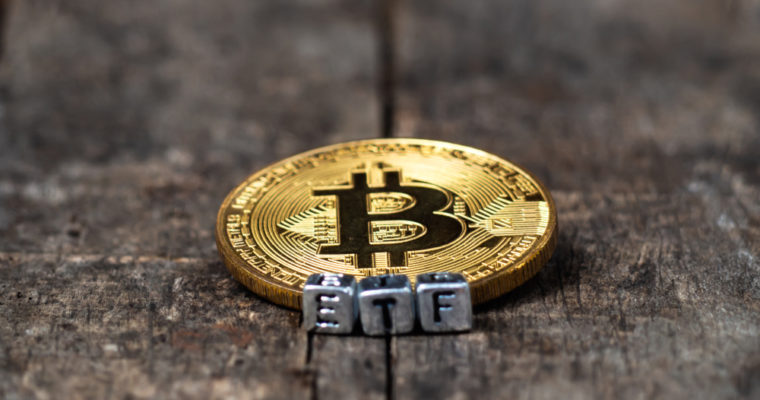
Bitcoin ETF Could Attract Billions in New Investment: VanEck

https://www.ccn.com/bitcoin-etf-could-attract-billions-in-new-investment-vaneck/


bitcoin etf vaneck


A bitcoin ETF could attract billions of dollars in new investments, so the Securities and Exchange Commission (SEC) should treat pending proposals as an opportunity to regulate the crypto market, said crypto exchange-traded fund advocate Gabor Gurbacs.

Gurbacs, the director of Digital Assets Strategy at VanEck, made this claim during an interview with CNBC Africa’s Crypto Trader. The comments came in the wake of VanEck’s persistent requests to the US securities regulator to approve their bitcoin ETF proposals. The SEC so far has rejected nine similar proposals, citing concerns about manipulation and market surveillance in the crypto spot market.

VanEck has been in the news for meticulously modifying its ETF application to address the SEC’s concerns. In times when the nascent crypto industry sometimes still works in a grey area of law, VanEck is attempting to launch a crypto ETF under a conventional regulatory watch.

If the SEC approves their ETF application, then it could certainly pave the way for both regulators and industry companies to understand how crypto fits into the federal regulatory framework.

SEC Concerns and VanEck’s Response

In the interview, Gurbacs said that VanEck’s bitcoin product would safeguard the interests of investors while preserving the overall benefits associated with digital currency trading.

“What sets our ETF apart is that it’s a physical bitcoin ETF. So, it stays true to the bitcoin you own in underlying,” he explained. “It’s fully insured so if there is any theft, hacks or losses; then the insurance covers it.”

Gurbacs also highlighted how they would protect the investors from price manipulation.

“The pricing,” he explained, “that we use for bitcoin comes from our indexing subsidiary. It is a regulated entity which provided the first financial standard and regulated indices. The ETF is institutional-oriented, so we have a cap of 25 bitcoins per basket.”

Market Prediction

The interview also saw a particular segment dedicated to exploring the potential approval of VanEck’s bitcoin ETF and how it might have an immediate impact on the bitcoin market as a whole.

Gurbacs predicted that a bitcoin ETF could perform much like a traditional gold ETF. Institutional investors, who do not want to take risks by investing in bitcoin via less secure and safe spot markets, could find ETFs as a go-to option. As a result, the very first day of a BTC ETF could attract as much as $1 billion in investments.

“Our gold ETFs are already in a few billion dollars range,” Gurbacs added. “There are gold ETFs in $10 billion range as well. I wouldn’t be surprised if a bitcoin ETF gets in a few billion dollars range.”

Featured Image from Shutterstock

Follow us on Telegram or subscribe to our newsletter here.
Who is Buying Bitcoin? Take the survey here and help us with our study.


Advertisement

NEO Super: Next-Generation Blockchain or Crypto Scam?

https://www.ccn.com/neo-super-next-generation-blockchain-or-crypto-scam/


NEO Super crypto scam


Several reports from the NEO underground have been grumbling about a fork of NEO calling itself “NEO Super.” The venture launched, seemingly apropos of nothing at all, and boasts only one real project, a wallet service that some community members fear could very likely be an effort to scam NEO users out of their private keys.

On further investigation, this reporter finds that the NEO Super project is, in fact, an effort to “snapshot” the NEO blockchain and utilize it on the Ethereum network, complete with “mining opportunities” and more. It wants to take the “most successful” elements of NEO and utilize them in the form of a standard ERC-20 token contract.

Although it’s not hard to write such things, it also isn’t impossible to launch such a project. It’s not hard to see why people perceive it to be a scam or potential scam. In NEO, the reader may not be aware, one must use his private key quite often to unlock the wallet, at least with the easier-to-use wallets. A solid way of capturing a mass of private keys would be to create a fake wallet service that actually did interact with the NEO blockchain and simply utilize said keys to pilfer a ton of funds.

“NEO Super” has only 39 Twitter followers, and an apparently associated Twitter account was banned. The project’s GitHub repository has made no notable changes or commits to the NEO codebase. And, easiest to spot of all, as one reporter noted:

“Because with a closer look at their LinkedIn pages you can easily tell that they are each fake.”

Indeed, CEO and lead developer John D. Martin” has only three connections on LinkedIn, despite an alleged seven-year development career.

What the project does have is a fully-written whitepaper, a nice looking website, a functioning clone of other NEO wallet services (minus the important — in NEO — function of printing the paper wallet) and an interesting idea that this reporter, likely among others, would surely like to be real.

Eliminate one attack vector in NEO and create a new system of smart contracts and scalability on Ethereum with the added bonus of free tokens to NEO holders? Sign us up! But let’s keep in mind that most scams are simply “too good to be true.”

According to the NEOX whitepaper, a fork as is done in Bitcoin, Ethereum, Litecoin, or the upcoming fork of Bitcoin Cash is not possible in NEO.

“A lot of misunderstanding and incorrect representations surround the question of NEO forks. To put it simply, NEO cannot be forked in the same way as Bitcoin or Ethereum — that is, there is no way to split the chain and create a new coin based on NEO.”

Which, of course, raises the question as to why they have built a wallet service that can capture NEO private keys. In any case, the fork is set to happen on November 10, and the immediate effect for traditional NEO holders will be a 1:2 issuance on the NEOX chain.

It’s unclear how users are to redeem their coins if this is to be an Ethereum token and smart contract, but users are certainly advised to not enter their NEO private key onto any service created by such an unknown and non-reputable provider as this upstart “NEO Super” team. If every NEO in existence at the time of the snapshot is to be duplicated and doubled in the new system, then there should be some way that users will be able to access it without affecting their existing holdings.

In short, the project is too confusing to declare it a scam outright, but it is also too unknown and, again, confusing, to necessarily recommend, though there’s no harm in experimentation and NEO is an open source protocol and project.

neo price crypto
Source: CoinMarketCap

If the developers are serious about launching an alternative to NEO, they’re picking a bad time to do so, with the token being in a depressed and declining state for quite some time now as regards its market. This indicates an overall loss of interest toward NEO, which means the potential success of this project is limited — assuming the whole effort is legitimate. And if the primary effort is to improve fault tolerance and prevent duplicate block publishing, then perhaps they should dedicate efforts to NEO development instead of starting a whole new project which brings the NEO blockchain as a whole into the Ethereum fold.

Disclaimer: The views expressed in the article are solely those of the author and do not represent those of, nor should they be attributed to, CCN.

Featured Image from Shutterstock

Follow us on Telegram or subscribe to our newsletter here.
Who is Buying Bitcoin? Take the survey here and help us with our study.


Advertisement